
|
Join Us!
[ Home ] [ Update ] [ Inside Moving Mountains ] [ Commentary ] [ About Us ] [ Advertising ] [ Join Us ][ Mountain Legacy ] [ Photos ] [ Blog ] [ Links ] [ Contact ]

DEPARTMENTS
A. The Hillary ModelB. Sport enterprise initiatives
C. Celebrity philanthropy
D. Promotional feats
E. Extremes
F. Team sports
G. Promotional events
H. Recurrent events
I. Global and regional games
J. Sport tourism
K. Diplomacy
L. Sport-Dev-Peace news
M. Dance
N. Martial Arts
O. Left Field
Moving Mountains (MM) is a new journal dedicated to the United Nations theme of sport for development and peace. The journal focuses on mountainous regions, including lowland gateways, but peripheral attention is paid to exemplary developments in lowland and oceanic regions. MM is a project of Mountain Legacy in collaboration with Himalayan Journal of Sciences (itself a project of the Himalayan Association for the Advancement of Science) and with faculty of Tribhuvan University (TU) and SUNY Cortland's Sport Management Department.
You can help!
We are looking for:
a) Feedback: isolated comments and suggestions, or long-term counsel
b) Contributions: articles, photos, letters
c) Reviews: specialists in a wide variety of fields
d) Department editors
For more details, see Inside Moving Mountains.
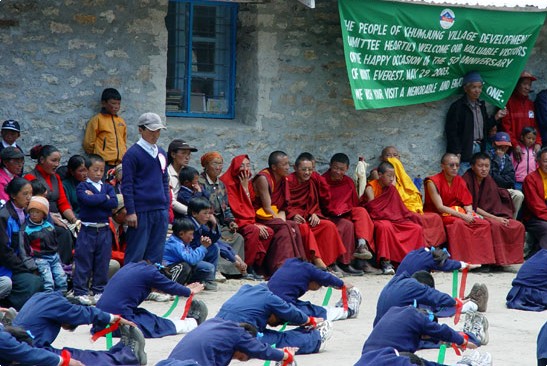
Khumjung schoolchildren perform to celebrate the 50th anniversary of the first ascent of Mt. Everest by Sir John Hunt's 1953 expedition. The banner reads:THE PEOPLE OF THE KHUMJUNG DEVELOPMENT
COMMITTEE HEARTILY WELCOME OUR VALUABLE VISITORS
ON THE HAPPY OCCASION OF THE 50TH ANNIVERSARY OF MT. EVEREST, MAY 29, 1953.
WE HOPE YOUR VISIT A MEMORABLE AND ENJOYABLE ONE.
Who should collaborate on Moving Mountains?
As the name suggests, there is a great deal of work to be done. We need qualified scholars to contribute original research articles in and/or to serve as reviewers on a broad array of topics, including sport management, economics, ecology, gender issues, and development. We need sport participants to contribute personal narratives of the impact of their activities on development and peace. We are interested in accounts of failed development, marginal successes, and shining examples, and we particularly want to know about opportunities for young people to become involved as amateur or professional sport-development-peace facilitators.
The connection between sport (or games in general) and peace is far older than the Olympics; the fact that many species engage in mock combat in order to establish dominance suggests that the connection is actually hard-wired into our genome. In part, sport's connection with peace is a reflection of its role as [often thinly] sublimated war: think of lacrosse among the American Indians. The perception of opportunity for economic development as a concomitant of sport is relatively recent, but certainly not original at this point. Nonetheless, as recreation becomes a more important component of the economy, opportunities are rapidly expanding. There is an increasing need for specific guidance as to how sport can be managed in a way that serves social needs beyond simple recreation.
Rationale
Sport for Development and Peace is a theme that embraces an open-ended array of activities, and we do not intend at this point to narrowly circumscribe the journal's coverage. The explanations given here are provisional.
- Sports may be engaged in for profit or for fun, competitively or not, in teams or individually, with or without rules. By way of illustration, we would include soccer, tennis, gymnastics, jogging, trekking, skiing, mountaineering, and some forms of dance. For reasons of personal predilection on the part of journal organizers, we would exclude hunting, fishing, bullfighting, or any other sport that injures or exploits animals.
- Development simply means change due to human impact, whether beneficial or not. We are most interested in the positive impacts that sport may have on society and environment, but in order to promote the positive we will necessarily have to take note of negative development as well.
- Peace is harmony among humans; it entails economic prosperity, sustainable use of resources, and equity in all opportunities.
Sport for peace and development does not necessarily mean that sport is undertaken for the purpose of achieving peace and development. Rather, the phrase focuses on the impact, whatever the intention.
As a "tool" for social engineering, sport comes into play in a variety of ways.
- Sports may become a key component of the economy of a community or even an entire region. It may become the basis for tourism, both domestic and international, and therefore contribute to peace and prosperity. In the case of outdoor sports, the economic agenda may translate into an agenda of natural and even cultural conservation.
- Sports events may be organized to raise funds for or promote consciousness of a given agenda. Nixon's ping-pong diplomacy, which facilitated the normalization of relations between the United States and China, is one example; another might be a local bicycle ride or walk-a-thon in support of AIDS research.
- Basketball or other sport leagues may be organized in an effort to sublimate and mitigate rivalries across social divides.
- Sports instruction in schools may be used as a tool of social engineering, to promote cooperation, discipline, and other desirable personal and social attributes.
- Participants in certain sports (such as mountaineering, trekking, and scuba diving) may become involved in protecting the environments they enjoy and in meeting objectives of host communities. This response is particularly significant inasmuch as many sports entail direct or collateral damage to the ecosystem, erosion of traditional culture, aesthetic degradation (through accumulation of waste material), introduction of health problems, and limitations on economic opportunities (particularly those that involve extractive exploitation of natural resouces).
- As exemplified by the Special Olympics, participation in sports can have a revolutionary impact on the lives of marginalized sectors of our society, providing an opportunity for them to earn the esteem of others as well as a sense of dignity. [Thank you, Eunice Kennedy Shriver!]
Moving Mountains will recognize and promote sport as a tool for positive social engineering. It will publish peer-reviewed research reports, articles, news, and columns for professionals, scholars, students, and prospective participants.
What does "Sport for Development and Peace" have to do with Mountain Legacy?
First of all, "development and peace" are goals that largely mirror those of Mountain Legacy. Sustainable development and social harmony depend on cultural and natural conservation. [ More ]
HJS: A Respected Model
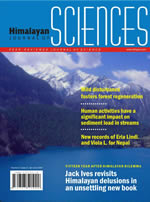
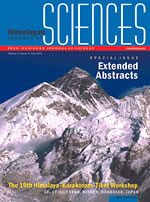
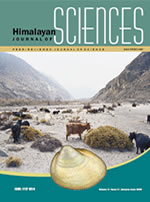
Moving Mountains will emulate the publication values represented by Himalayan Journal of Sciences, a respected journal since 2002.
Contact
If you are interested in participating in Moving Mountains or have any feedback, contact Mountain Legacy Projects Coordinator Seth Sicroff at sicroff@gmail.com; 511 W. Green St., Ithaca NY, 14850 USA; (607) 256-0102.
|
[ Home ]
[ Update ]
[ Inside Moving Mountains ]
[ Commentary ]
[ About Us ]
[ Advertising ]
[ Join Us ] |