

Swimming the Skeena
"Whatever happens at the source affects all of us downstream."
-- Ali Howard, on the Skeena River 2009 Trailer clip below.
This summer the 33 year-old Smithers resident Ali Howard swam the entire 610-km length of the Skeena River in northwest British Columbia. "The Skeena is one of North America’s most magnificent rivers," said Howard. "I’m hoping my swim will help strengthen connections among Skeena residents and build a common vision for the watershed’s future."
What's the point?
Why would Ali Howard put herself through a grueling 28-day swim in water down a remote ice-cold whitewater river?
1.) Raise awareness of the Skeena as one of North America’s greatest rivers
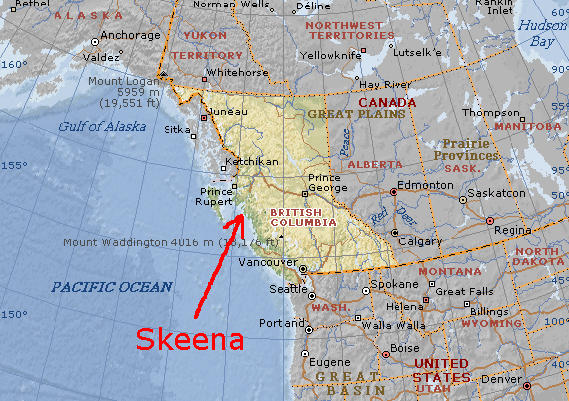
The 610-kilometre Skeena River is one of the world’s longest undammed rivers, and is the second longest river in British Columbia. Unlike the Fraser, the Skeena has been spared widespread industrial development, and a large portion of the Skeena watershed remains an intact, functioning ecosystem.
Skeena Watershed (click for larger map)
Wild salmon are at the heart of what makes the Skeena River special. Each year, all five species of wild salmon plus steelhead make their way up-river to spawn in their natal streams. They give rise to a $100-million wild salmon economy that sustains communities along the Skeena and includes First Nations fisheries, commercial fishing, and recreational angling.
First Nations have called the Skeena home for thousands of years, and numerous First Nations communities are located throughout the watershed. The Tsimshian and the Gitxsan First Nations’ names mean "inside the Skeena River" and "people of the Skeena River."
2.) Draw attention to threats to the Skeena watershed
The Skeena is rich in resources and over the years there have been several industrial developments proposed that have threatened the integrity of the watershed and its salmon. Skeena Watershed Conservation Coalition is currently drawing attention to some of the proposed developments including:
Shell and the Sacred Headwaters
The Sacred Headwaters is the shared birthplace of the Skeena, Nass and Stikine Rivers — an area rich in wildlife and salmon spawning habitat. Shell wants to drill over 1,000 gas wells in this sensitive area to gain access to coalbed methane gas, a type of natural gas found in coal seams. Their project is strongly opposed by residents of all three watersheds because of the impact it will have on the landscape of the Sacred Headwaters and the wild salmon habitat downstream in the Skeena. After rallies and protests in BC and internationally, in 2008 the BC government placed a moratorium on Shell’s planned drilling. This moratorium is temporary, however, and we are working to gain permanent safeguards for the Sacred Headwaters.
Enbridge and the transport of tar sands oil through the Skeena
Enbridge is planning an 1,100-kilometre pipeline between the Alberta tar sands and the BC coast along a route that cuts through the Skeena watershed. The project brings the risk of oil spills, both from the pipeline and from the supertankers that will be required to move the oil to overseas markets. There is growing concern among Northwest BC residents. They fear a disaster like the Exxon Valdez spill, which would decimate the coastal environment and affect the Skeena’s wild salmon. They are also concerned because Enbridge’s pipeline is tied closely to expansion of the tar sands, which are Canada’s fastest growing source of greenhouse gas pollution.
3.) Connect communities around a sustainable vision for the Skeena’s future
Perhaps the Skeena’s greatest assets are its people, who live in tight-knit communities and who are all connected in one way or another to the watershed and its salmon. Through her swim, Ali hopes to spark a conversation about how we can work together for the future of the Skeena — one that allows our children and grandchildren to enjoy the same quality of life we do. And one that sees wild salmon continue to exist in their full diversity and abundance.
"We have an opportunity here to do things differently – to have vibrant communities and a healthy watershed," says Ali. "There are going to be proposals that don’t fit with this vision, and we’ll have to work to stop them. But we’ll also work together to build positive things — like new economic opportunities from clean energy and food security for our communities."
For more information: www.skeenawatershed.com
